
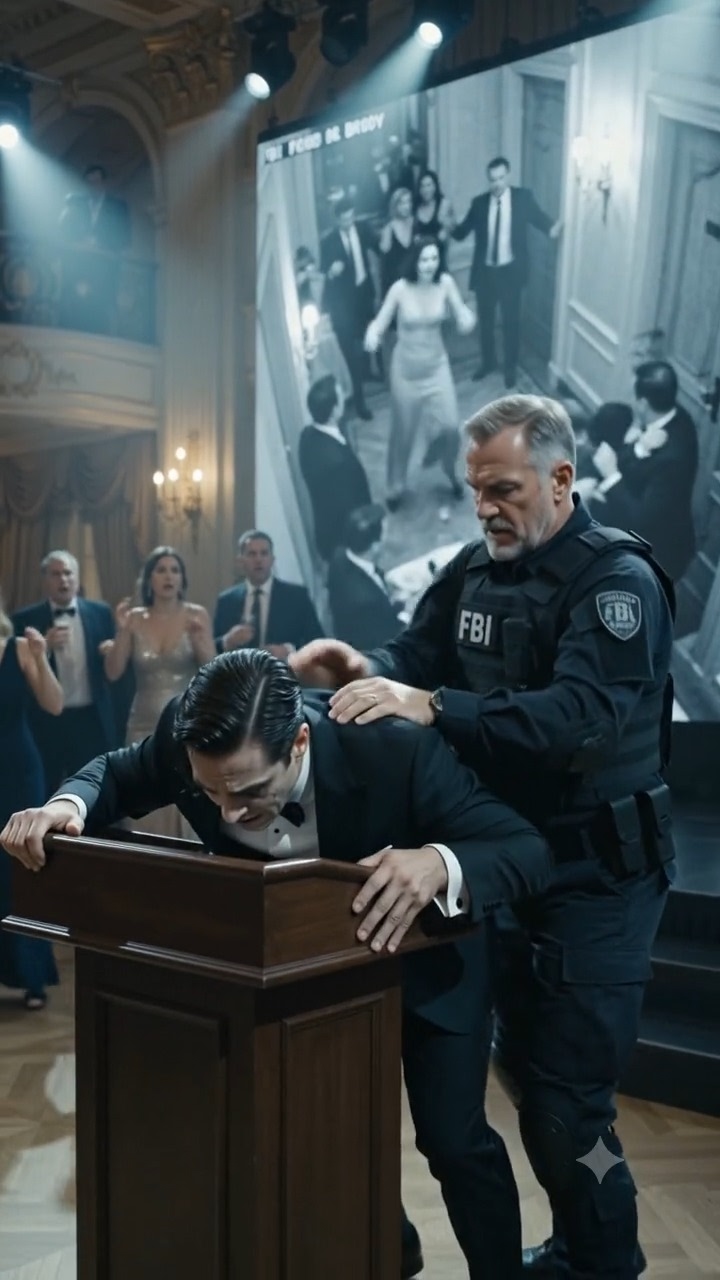
Chapter 1: The Ghosts of Ash & Iron
The silence that settled over my mind in that split second was louder than the frantic shouting of two hundred wedding guests, louder than the hysterical sobs of my sister, and louder than the flashing cameras capturing the utter destruction of the Whitaker dynasty.
“Your mother never died.”
The words didn’t feel real. They felt like jagged shards of glass scraping against the inside of my brain. For twenty-three years, I had carried the weight of an empty urn. I had spent countless nights as a child weeping into my pillow, clutching a single black-and-white photograph of a woman with sad, intelligent eyes and a smile that never quite reached her gaze. I had been told she perished in a horrific six-car pileup on Route 9, her car swallowed by a fireball so intense that the medical examiner had to identify her through dental records.
I had built my entire life on the grief of her absence. And now, Richard Whitaker—the man whose blood ran in my veins, the man who had just stripped me of my dignity, my inheritance, and my identity in front of high society—was using her corpse as leverage.
Or rather, her ghost.
“You’re lying,” I whispered, my voice cold, sharp, and stripped of all emotion. I didn’t pull my arm away from his grip. I wanted him to feel how still I was. “You’re desperate, Richard. You just realized your precious son-in-law, Julian, has been bleeding your holdings dry for eight months, and you’re grasping at whatever lever you think will make me stop.”
Richard’s fingers dug deeper into my forearm, his polished veneer completely cracking. Up close, the high-definition cameras couldn’t capture the subtle tremors in his jaw, nor the sickly yellow tint in the whites of his eyes. He was a man drowning in his own arrogance, but the look in his eyes wasn’t just fear of financial ruin. It was the frantic terror of a man whose ultimate secret had just breached the surface.
“I have the medical records, Laurel,” he hissed, his breath smelling faintly of vintage champagne and panic. “I have the transfer receipts. I have the signed non-disclosure agreements from the psychiatric facility in St. Jude’s Bay. You think I erased you tonight because I hate you? I erased you because you were getting too close to the old ledgers! You were digging into the 2001 corporate restructures!”
“Dad!” my sister, Chloe, shrieked, stumbling toward us in her ten-thousand-dollar Vera Wang gown, her makeup smeared with rage and humiliation. Julian was three steps behind her, looking frantic, his eyes darting toward the exits as several high-profile investors in the crowd began whispering furiously into their phones. “Dad, make her leave! Call security! She’s ruining everything! Julian, tell her she’s lying!”
Julian didn’t say a word. He looked like a man standing on a landmine, terrified that shifting his weight even a millimeter would blow his entire life to pieces.
“Shut up, Chloe!” Richard barked without turning his head, never breaking eye contact with me. It was the first time in her pampered, golden-child life that he had ever raised his voice to her. Chloe gasped, taking a step back as if he had struck her.
“Here is the deal, Laurel,” Richard whispered, his voice dangerously low. “You drop the lawsuit you filed against Whitaker Enterprise’s offshore subsidiaries yesterday. You hand over the master encryption keys to the shell accounts you just exposed to these vultures… and I will give you a address. An address where Eleanor Whitaker has been living under heavy sedation for twenty-three years.”
My heart hammered against my ribs like a trapped bird, but my face remained an unreadable mask. I had trained myself for years never to let Richard Whitaker see me bleed.
“If she’s alive,” I said slowly, “why hide her?”
“Because if she wakes up…” Richard’s voice wavered, a rare, terrifying crack in his armor, “…she puts us all in prison. Including you.”
He let go of my arm, stepped back, and adjusted his silk tie, attempting to regain his posture for the recording cameras. “You have forty-eight hours, Laurel. Refuse, and the facility receives an anonymous tip to double her dosage. She won’t survive another month.”
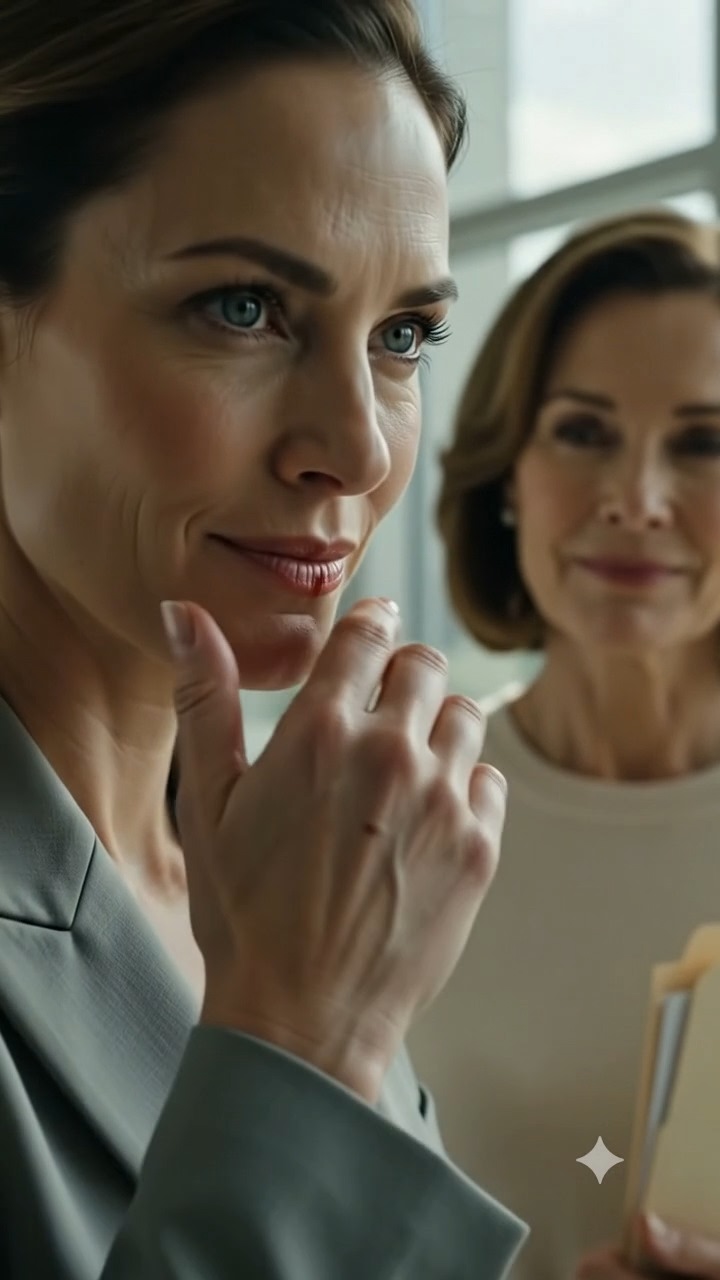
A cold, calculated rage—different from anything I had ever felt before—settled deep into my bones. I didn’t scream. I didn’t slap him back. I reached into my purse, pulled out a silk handkerchief, and casually wiped the blood from the corner of my lip where Chloe’s ring had cut me.
“You have twenty-four hours, Richard,” I said softly, ensuring my voice carried just far enough for the front row of guests to hear. “Because by this time tomorrow, the Securities and Exchange Commission will have every single line of code from Julian’s shell companies. And as for my mother… I don’t need your permission to find what’s mine.”
I turned on my heel and walked out of the grand ballroom.
Behind me, the dominoes fell in spectacular fashion. Chloe was screaming at Julian; Julian was yelling at his attorneys; and Richard was shouting for security officers who were far too bewildered to stop me. The heavy oak doors of the St. Regis Hotel closed behind me, cutting off the noise, but the war had officially begun.
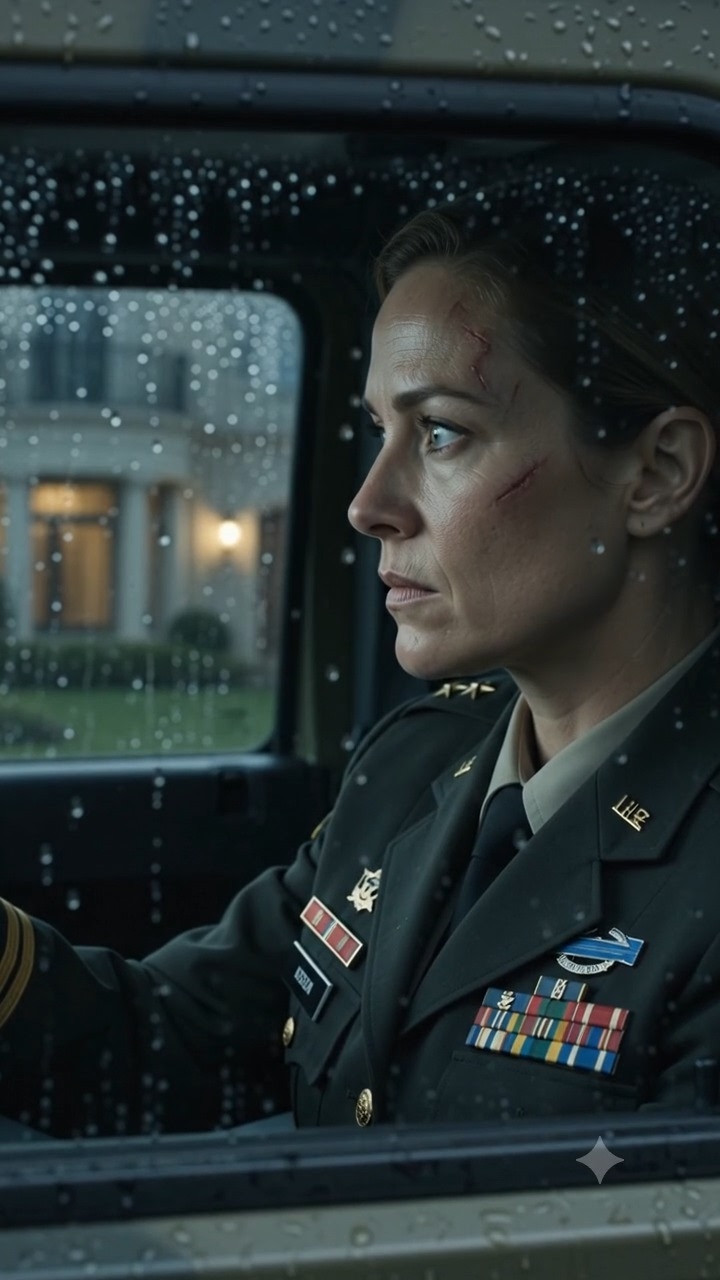
Rain was pouring over the city as I stepped onto the wet pavement. My driver, Marcus—a man who had served as my personal security and confidant since I turned eighteen—immediately opened the rear door of the black sedan.
“Miss Laurel,” Marcus said, his eyes sharp as he took in the welt forming on my cheek and the blood on my handkerchief. “Are you alright? We monitored the audio feed from inside. Did he really say—”
“Get in the car, Marcus,” I said, sliding into the leather interior. “We aren’t going back to the penthouse.”
“Where are we going?”
“St. Jude’s Bay,” I said, staring out at the rain-slicked city lights. “And call Dr. Vance. Tell him we need to pull the legacy files on Eleanor Whitaker immediately.”
As the sedan pulled into the night, my mind raced back through the timeline. Twenty-three years ago, I was five years old. Chloe was three. Our family had been modest back then; Whitaker Enterprises was just a small shipping logistics firm struggling to stay afloat. Then, overnight, the accident happened. My mother was pronounced dead, the insurance payout was massive, and within six months, Richard miraculously secured fifty million dollars in private venture capital to transform the company into a multi-billion-dollar global juggernaut.
I had always assumed he was just a ruthless businessman who built an empire out of grief.
Now, the terrifying truth began to crystallize: Richard hadn’t built an empire out of grief. He had built it out of a crime. And my mother wasn’t a tragic victim. She was the collateral damage.
Two hours into the drive toward the coastal town of St. Jude’s Bay, my phone buzzed endlessly with frantic notifications. News of the public humiliation at the wedding had already broken on financial news networks. “WHITAKER FAMILY FEUD: HEIR EJECTED, FRAUD ALLEGED AT $5M WEDDING.” The company’s stock was already dropping in pre-market trading. Chloe had posted three hysterical, now-deleted videos calling me a sociopath, while Julian’s legal team had issued a weak statement denying all financial impropriety.
I ignored them all. I only cared about one thing.
At 2:00 AM, the sedan pulled off the dark highway onto a winding, unpaved road flanked by towering pine trees and dense fog. St. Jude’s Bay was a secluded, forgotten corner of the state, known primarily for private sanitariums catering to the disgraced, wealthy elite who needed to disappear.
We stopped outside a massive, Victorian-era stone compound surrounded by high wrought-iron fences and heavy security gateposts. The brass plaque near the entrance read: St. Jude’s Restorative Care Facility.
“Security is tight, Miss Laurel,” Marcus warned, looking at the armed guards stationed at the gate. “Your father’s name is likely on the master access list. Yours won’t be, especially after what happened tonight.”
“My father’s name is on the front gate,” I said, pulling a encrypted flash drive from my coat pocket. “But I own forty percent of the medical tech company that supplies their life-support hardware. Drive up to the gate, Marcus.”
When the head security guard approached the window, flashlight shining into the cabin, I lowered my window halfway.
“Facility is closed to visitors,” the guard said brusquely. “State your business.”
“My name is Laurel Whitaker,” I said, holding up my board-member identification credentials alongside a court order draft my legal team had prepared in the car. “I am here for an emergency compliance audit of Ward C. You have two minutes to call Director Sterling, or I revoke your facility’s clearance for our proprietary monitoring software. That turns off every heart rate monitor in this building in ten minutes. Try explaining that to the board.”
The guard swallowed hard, looking at the crisp, authoritative glow of the credentials. He retreated to the guardhouse, made a brief, panicked phone call, and within ninety seconds, the heavy iron gates swung open.
The main building was suffocatingly quiet. The air smelled intensely of antiseptic, damp stone, and old dust. Director Sterling, a tall, gaunt man with thinning hair and wire-rimmed glasses, met us in the marble lobby. He looked visibly rattled, sweating despite the chill in the air.
“Miss Whitaker,” Sterling stammered, wringing his hands. “We were not expecting you. Your father… Mr. Richard Whitaker… explicitly instructed us that under no circumstances were family members permitted—”
“My father just publicly stripped me of my position,” I interrupted, stepping directly into his personal space. “Which means his non-disclosure restrictions on me no longer apply. Take me to Eleanor Whitaker.”
“Miss Whitaker, please, your mother is in a delicate state!” Sterling pleaded, backing away. “She has been under specialized palliative care for over two decades. She suffers from severe, chronic cognitive dissociation! She doesn’t recognize anyone! Reintroducing a family member could cause fatal psychological stress!”
“If you don’t walk me to her room right now,” I said, my voice dropping to a dangerous whisper, “I will have federal marshals raiding this building by sunrise with a warrant for illegal human trafficking and unlawful confinement. Pick.”
Sterling’s face drained of color. He reached into his pocket, pulled out a heavy keycard, and signaled for two guards to fall in behind us.
We walked down a labyrinth of subterranean hallways, descending deep into the old stone foundations of the building. This wasn’t a luxury recovery center; it was a high-security vault designed to hide human beings from the world. We passed rows of unmarked, heavy steel doors with tiny reinforced glass windows.
Finally, at the very end of the lowest corridor, we stopped before Door 104.
Sterling swiped his keycard, typed in a six-digit PIN, and unlocked the heavy mechanical deadbolts. The door swung open with a heavy, metallic groan.
The room inside was dimly lit by a single floor lamp. It was unexpectedly warm, smelled faintly of lavender and old paper, and was lined with dozens of filled sketchbooks stacked neatly along the walls.
In the center of the room, sitting in an armchair near a locked, barred window, was a woman.
Her hair was pure white, cropped short, and her frame was frail, wrapped in a thick wool shawl. Her back was to us, her hands steadily working a pencil across a pad of paper.
My heart felt like it had stopped beating entirely. The world seemed to shrink down to the sound of my own shallow breathing.
“Mother?” I choked out, the word feeling completely foreign on my tongue after twenty-three years.
The woman’s pencil paused.
Slowly, deliberately, she turned around.
The face was older, lined with deep creases of time and isolation, but those eyes—the deep, piercing green eyes from the black-and-white photo on my nightstand—were unmistakable. She didn’t look crazy. She didn’t look dissociated.
She looked at me, her eyes tracking from my face down to my blood-stained dress, and then back up to my eyes.
She didn’t cry. She didn’t scream.
Instead, a subtle, razor-sharp smile slowly spread across her lips—the exact same smile I had given my father at the wedding.
“You took your time, Laurel,” Eleanor Whitaker said, her voice dry as autumn leaves, but completely, horrifyingly clear. “Did you bring the fire, or did Richard beat you to it?”
Orther Post

The Whitaker Lie: Echoes from the Ashes
6
Chapters