
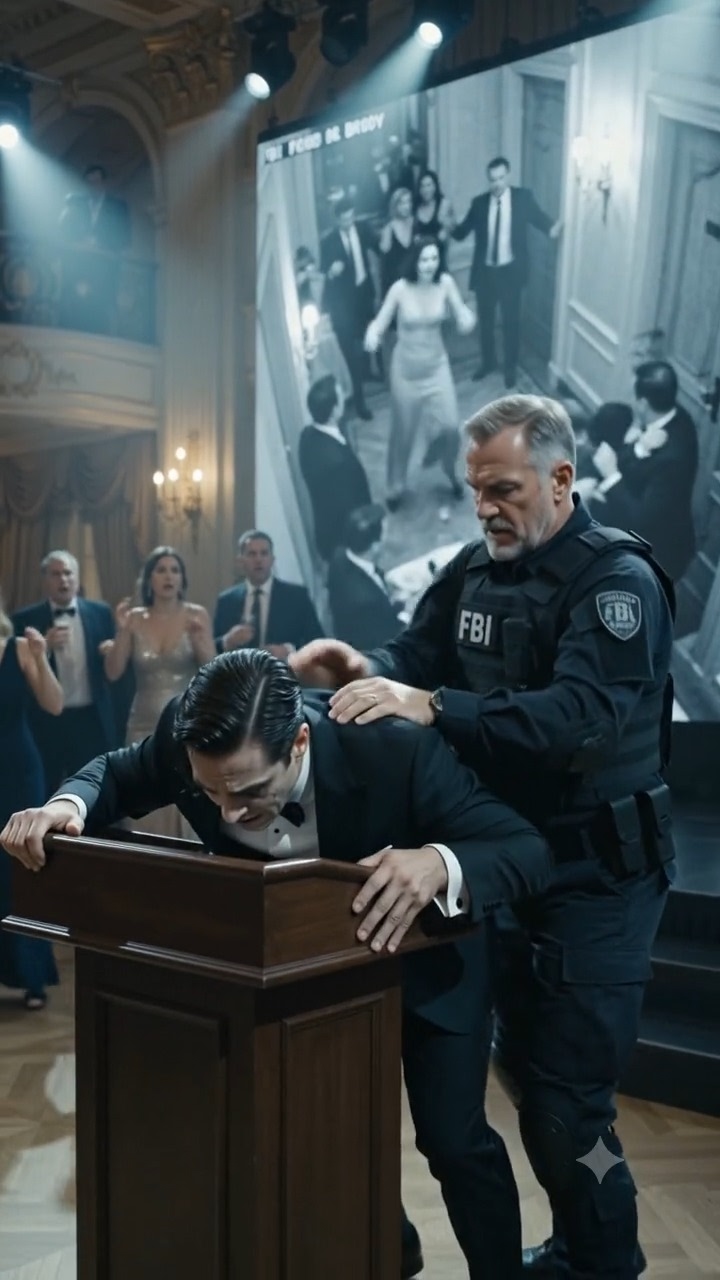
CHAPTER 3: THE EARTHQUAKE AT THE PRECINCT
By 6:30 p.m., the front lawn of my quiet suburban home had cleared, but the shockwaves were just beginning to hit the city.
The arrest of Monica Bennett was merely the falling of the first domino. The three folders sitting on my coffee table were not just evidence against a bitter, embezzling sister—they were the blueprint of a systemic, deep-seated corruption network that had infected the core of the city’s law enforcement apparatus for nearly a decade.
While federal agents transported Monica to the metropolitan detention center, I sat in the front passenger seat of Assistant U.S. Attorney Marcus Kane’s unmarked command vehicle, speeding toward the 4th Precinct headquarters downtown. Eli was safely at my neighbor’s house—Mrs. Higgins, a retired schoolteacher who had known Eli since the day he was brought home from the hospital, was happily feeding him homemade macaroni and cheese under the watchful guard of two plainclothes State Troopers.
“Are you ready for this, Rachel?” Kane asked, keeping his eyes on the road as the red emergency lights flashed against the highway concrete. “Once we step through those precinct doors with these warrants, there’s no turning back. Half the command staff is going down.”
“I opened those folders, Marcus,” I replied, looking out the side window at the passing city lights. “I’ve been ready for four months.”
When we pulled up to the 4th Precinct—a imposing, concrete fortress built in the 1970s that smelled eternally of stale coffee, floor wax, and damp coats—the parking lot was already surrounded by state police cruisers.
The officers inside the precinct had no idea what was coming. To them, it was just the end of a standard day shift. Officers were sitting at their desks typing up incident reports, detectives were drinking coffee in the bullpen, and shift sergeants were arguing over overtime pay.
Then we walked in.
I walked through the double glass doors wearing my full Internal Affairs Lieutenant uniform—gold shield pinned to my chest, my dark blue blazer pressed and sharp. Behind me walked Kane, eight federal agents, and six State Police Internal Affairs investigators carrying empty evidence boxes.
The bullpen went completely silent the moment I stepped onto the floor.
Officers stopped typing. Detectives frozen mid-sentence looked up from their desks. Everyone knew who I was. Internal Affairs is never welcomed in a precinct, but the sight of an IA Lieutenant entering with a federal strike force meant only one thing: execution day.
“Lieutenant Bennett,” came a loud, booming voice from the far end of the hallway.
Captain Richard Hayes stepped out of his corner office. He was a massive man, six-foot-four, with slicked-back gray hair, a heavy gold signet ring on his finger, and a chest covered in commendation ribbons. He was wearing his dress uniform, looking every bit the untouchable political powerhouse he had built himself up to be.
“What is the meaning of this circus?” Hayes demanded, walking down the central aisle of the bullpen with his hands on his belt, trying to project total dominance. “Bennett, why aren’t you suspended? I personally authorized an emergency protective custody order against you two hours ago. You shouldn’t even have a badge right now.”
I stopped ten feet away from him. I didn’t flinch. I didn’t raise my voice.
“Captain Hayes,” I said clearly, my voice carrying into every corner of the crowded room. “Your emergency order was based on fabricated evidence provided by a criminal conspirator named Monica Bennett. Who, as of twenty minutes ago, is currently in federal custody.”
A collective gasp rippled through the bullpen.
Hayes’s face flushed a deep, dangerous purple. “You’re out of line, Lieutenant! You’re stripped of duty! Hand over your weapon and badge immediately, or I will have you arrested for criminal trespass!”
“He can’t do that, Captain,” Marcus Kane stepped forward, pulling a thick yellow document from his leather briefcase and holding it up in front of Hayes’s face. “Because this is a federal arrest warrant signed by Chief Judge Miller of the District Court. Richard Hayes, you are under arrest for federal racketeering, bribery, extortion, and obstruction of justice.”
Hayes stared at the paper as if it were written in an ancient, dead language. “This… this is absurd! You can’t arrest a Precinct Commander based on the wild accusations of a rogue IA officer!”
“It’s not just her accusations, Captain,” Kane said coldly. “We have three black folders containing five hundred pages of bank transfers, wiretap recordings, and dock shipping manifests detailing twelve million dollars in smuggled contraband cleared through your precinct over the last three years.”
Hayes looked around the room, desperately looking for support from his officers. “Sergeant! Arrest these people! They are violating state sovereignty!”
Not a single officer moved.
The detectives in the bullpen—men and women who had worked under Hayes for years—looked at the federal agents, then looked at Hayes, and slowly stepped back from their desks, hands clear of their weapons. They were corruptible, perhaps, but they weren’t stupid. They knew when an iron roof was collapsing.
Two federal agents stepped up behind Captain Hayes. Before he could react, they grabbed his arms, pulled them behind his back, and snapped a pair of heavy steel handcuffs onto his wrists.
“You’re done, Richard,” I said, stepping closer to him, looking him straight in his bloodshot eyes. “You thought you could use my son to break me. You thought that if you threatened my family, I would drop the investigation and run away. But you forgot one simple rule of Internal Affairs.”
I leaned in closer, dropping my voice to a dangerous whisper.
“We don’t run. We document.”
The agents led Captain Hayes down the main aisle of his own precinct, past the desks of the officers he had commanded for a decade. The man who had ruled the 4th Precinct like his personal fiefdom was paraded out the front doors in handcuffs, his head bowed, while news cameras—already tipped off by the U.S. Attorney’s office—flashed furiously through the glass doors.
But the cleanup was far from over.
I turned back to face the bullpen. The entire room was watching me, paralyzed with fear, wondering whose name was on the next page of those three black folders.
I pulled a second document from my portfolio.
“Sergeant Miller,” I called out.
A mid-level officer near the back went pale and stood up slowly. “Yes, Lieutenant?”
“Hand over your badge and service weapon. You are suspended effective immediately pending federal indictment.”
“Detective Vance,” I called out next. “Step forward.”
“Lieutenant Kowalski. Detective Ruiz. Officer O’Malley.”
Name after name echoed through the cavernous room. One by one, seven senior officers and detectives unclipped their badges, laid their service weapons on their desks, and were escorted into holding cells by State Police IA agents.
By 8:00 p.m., half the command staff of the 4th Precinct was in chains.
The precinct didn’t just lose its leadership that night—it lost its illusions. The systemic network of payoffs, manipulated evidence, and political extortion that had protected the city’s high-society criminals like my sister was dismantled in a single, surgical stroke.
And it had all started with a knock at my front door at 4:47 p.m.
Orther Post




DON'T TOUCH MY SON: The 4:47 PM Conspiracy
6
Chapters