
PART 3 — THE FORENSIC CLEANUP
The lights in Trauma Bay 4 of Saint Jude’s Memorial Hospital were brutally bright.
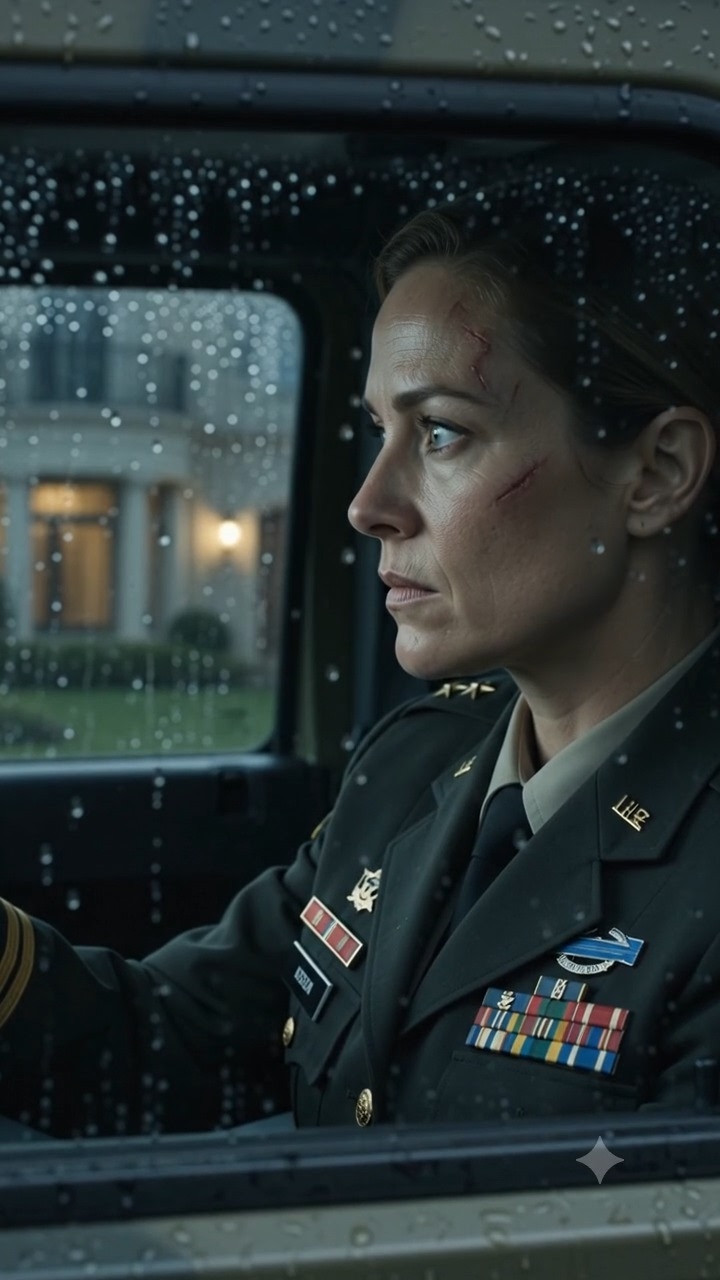
I stood against the back wall, my arms crossed, my dress uniform cap sitting on the stainless-steel counter beside a tray of sterile syringes. Outside the glass doors, two armed State Troopers stood guard, their hands resting comfortably on their belts.
Dr. Sarah Lin, a senior orthopedic surgeon with twenty years of trauma experience, pulled down the digital X-ray scan on the light board.
“Two broken ribs on the left side,” Dr. Lin said, pointing a silver pen at the luminescent bone image. “A compound fracture of the distal radius in her left wrist—that’s a defensive injury, Colonel. She put her hand up to block a high-velocity strike. And severe soft-tissue bruising across her right scapula.”
I stared at the white fractures on the black film. Each jagged break was a line written in violence.
“Will she regain full mobility in her hand?” I asked. My voice was entirely flat.
“With surgery, a titanium plate, and six months of physical therapy… yes,” Dr. Lin replied, turning to look at me. “She’s extremely lucky, Colonel. If that blow to her wrist had landed four inches higher, on her temple…”
“I know,” I said. “Thank you, Doctor.”
I walked over to the bed. My mother was sleeping, heavily medicated with pain management fluids delivered through an IV drip. Her left arm was already encased in a heavy blue temporary cast. Her grey hair had been washed clean of the blood by a gentle nurse, but the massive purple bruise across her cheek was a vivid reminder of the night’s work.
My secure satellite phone vibrated against my hip. I stepped out into the quiet hallway before answering.
“Carter,” I said.
“Colonel, it’s Jackson,” the Lead Deputy Marshal’s voice came through, crisp despite the static of the thunderstorm. “We’ve secured the Landry residence. You were right. It wasn’t just a sudden argument.”
“What did you find?”
“The bat was in the trunk of Brooke Landry’s Mercedes,” Jackson said. “She tried to wipe it down with bleach, but she did a sloppy job. Luminal picked up blood traces all over the barrel and handle. We’ve already logged it into federal custody. But that’s not all.”
I leaned against the cool tile wall of the hospital corridor. “Go on.”
“We found a fireproof safe in the basement,” Jackson continued. “Captain Landry’s name is on the deed to the house—turns out he owns twenty percent of the property through an LLC. Inside that safe, we found three hundred thousand dollars in unrecorded cash, six illegal unregistered suppressors, and a ledger detailing monthly payments from a regional narcotics distribution network operating out of the Westbridge rail yard.”
I closed my eyes for three seconds. The corruption wasn’t just local nepotism; it was systemic, deep-rooted, and lucrative. Landry hadn’t just protected his niece because she was family; he protected her because she was part of the financial structure that held his illegal empire together. Arthur’s real estate firm was likely the money-laundering vehicle.
“Where is my brother?” I asked.
“In an interrogation room at the federal building in Newark,” Jackson replied. “He’s crying, Colonel. He’s spent the last two hours begging to speak to you. He says he didn’t know about the cash in the safe. He says Brooke controlled all the finances.”
“Tell him his sister is unavailable,” I said coldness creeping into every syllable. “Tell his attorney that any cooperation he offers regarding Captain Landry’s offshore accounts will be noted, but no plea bargains will be signed until I personally review the terms.”
“Understood. What about the police station?”
“I’m coming down now,” I said. “Hold the entire shift in the briefing room. Nobody leaves. Nobody uses the restroom without an escort. confiscate every personal cell phone.”
Twenty minutes later, I walked back into the Westbridge Police Station.
The atmosphere had transformed completely. The air, previously thick with the casual authority of small-town cops who believed themselves untouchable, was now heavy with terror.
Federal agents in windbreakers were carrying out gray plastic evidence bins filled with hard drives, paper files, and logbooks. Three state police vehicles were parked in the fire lane, their emergency lights painting the wet brick walls in rhythmic flashes of blue and red.
I walked down the central hallway toward the station’s main briefing room.
Inside, eleven police officers—the entire night shift, plus two off-duty detectives who had been summoned by Jackson—sat at long folding tables. Captain Thomas Landry sat at the front, stripped of his sidearm, his duty belt lying on the podium before him like a dead snake.
When I entered, the room went rigid.
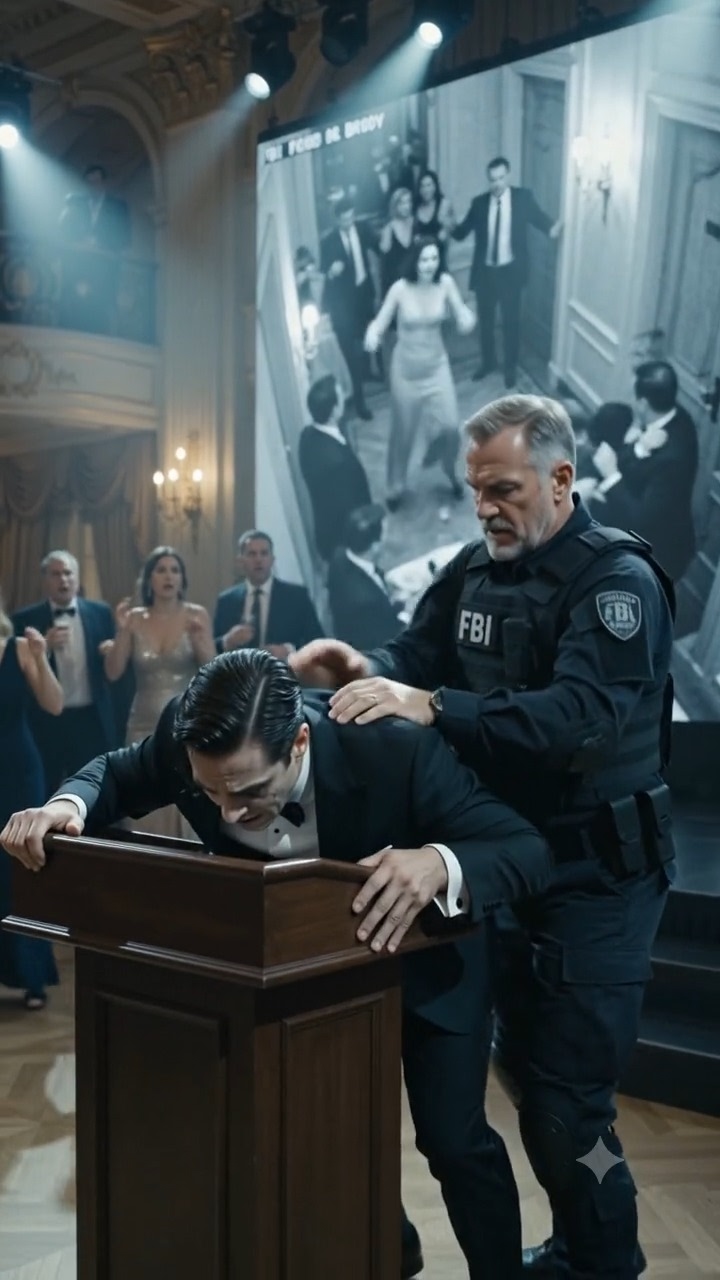
I walked to the front, placed my hands flat on the wooden podium, and let my gaze sweep slowly over every face in the room.
“At 0215 hours this morning,” I began, my voice echoing off the concrete walls, “a seventy-one-year-old woman was brought through those rear doors. She was bleeding. Her bones were broken. She was denied medical treatment, denied her constitutional right to counsel, and locked in a supply bathroom while senior officers altered logbooks and returned the weapon used to assault her to the primary suspect.”
I looked directly at Officer Vance.
“Officer Vance,” I said. “Who ordered you to turn off your body camera when I walked into the lobby?”
Vance swallowed hard. His face turned red, then pale, then red again. He looked at Captain Landry. Landry’s eyes were fixed on the floor, his jaw set in a tight, sullen line.
“I… I asked you a question, Officer Vance,” I said, stepping away from the podium and walking toward his table.
“Captain Landry,” Vance squeaked, his voice cracking like an adolescent’s. “He… he signaled from the doorway. Hand gesture. Double tap on the chest. That’s… that’s our internal signal to cut audio and video during sensitive domestic calls involving department staff.”
“A standard operating procedure for a cover-up,” I noted aloud. “Agent Jackson, log Officer Vance’s statement. That is Direct Evidence Item 42.”
“You can’t do this, Clara!” Landry suddenly snarled, slamming his fist onto the table as he stood up. His chair scraped violently against the floor. “This is a setup! You used your federal position to target this department because of a personal grudge! You’re abusing your authority!”
I turned to him slowly, raising one eyebrow.
“Abusing authority?” I asked softly. “Captain Landry, six months ago, the Department of Justice began investigating a series of dismissed DUI charges, missing evidence seizures, and suspicious property foreclosures in Westbridge Township. Your name appeared on seventy-two individual administrative overrides.”
I stepped right up to his table, leaning down until our faces were inches apart.
“I didn’t pick you, Captain,” I whispered. “You picked my mother. You thought she was just an old, helpless woman with no one in her corner. You thought you could break her bones, brand her as insane, and throw her into a cell to protect your family’s dirty money.”
I pulled a crisp, white envelope from my pocket and laid it gently on the table in front of him.
“That is an immediate suspension without pay, effective twenty minutes ago,” I said. “And that…” I pointed to the double doors, which swung open to reveal two federal agents holding heavy steel leg irons, “…is your transportation to the federal detention facility.”
Landry looked at the leg irons. The arrogant edge that had sustained him for decades finally collapsed. His shoulders caved in. His eyes went dull and glassy.
“Take him away,” I commanded.
As the agents hauled Landry out of the room, his boots dragging uselessly against the floor, the remaining officers sat frozen, terrified to even breathe loudly.
I turned back to the room.
“The rest of you have sixty minutes to write down every illegal order, every altered report, and every kickback you have witnessed in this precinct over the past five years,” I said calmly. “Those who write complete, honest statements will be considered for cooperation agreements. Those who protect Landry will share his cell block.”
I checked my wrist watch. It was 04:15 A.M.
“Your time starts now.”
Orther Post


2:27 A.M.: THE COLONEL'S REVENGE
5
Chapters