CHAPTER 3: The War of the Statements
By the third day, the narrative surrounding the “Blackwood Manor Incident” exploded into a full-scale public spectacle.
Celeste Montgomery’s family was prominent in upper-crust social circles, and Julian Sterling’s father was a wealthy legal tycoon. They had expected the story to die quietly in the back pages of the local newspaper. They had assumed that I—quiet, obedient Emily—would cover for them to keep the family out of the tabloids, just as I had done my entire life.
They were wrong.
While I sat by Leo’s incubator in the NICU, watching as the doctors slowly lowered his oxygen dependencies, Nathan was working tirelessly with a fierce civil rights attorney named Evelyn Cross.
Evelyn was a woman in her late fifties with sharp gray eyes, tailored suits, and a reputation for crushing country-club elites in courtrooms. She walked into my hospital room on Thursday afternoon carrying a thick leather briefcase and a tablet showing live internet metrics.
“Mrs. Hayes, Mr. Hayes,” Evelyn said, taking a seat on the vinyl chair near my window. “It’s time we talk strategy. Your mother was released on a two-hundred-thousand-dollar bail three hours ago. Her legal counsel has already issued a statement to the press.”
Evelyn tapped her tablet and slid it across my bedside tray.
I looked at the screen. It was a formal press release on heavy cream letterhead, issued by the Sterling & Vance Legal Group.
“The Montgomery family wishes to express their deep concern for Emily Hayes and her newborn child during this difficult medical emergency. However, we must forcefully refute the sensationalized and inaccurate reports currently circulating in the media. What occurred at Blackwood Manor was a tragic series of miscommunications resulting from an unexpected medical episode.
“Mrs. Celeste Montgomery acted out of a genuine belief that her daughter was experiencing an emotional crisis rather than physical labor, based on previous interactions. At no point was there any intent to harm or restrain Mrs. Hayes. The family requests privacy as they work through this sensitive domestic matter internally.”
Reading those words made my stomach churn with a sickening fury.
“They are framing you as unstable, Emily,” Evelyn said calmly. “They are going to argue in court that Celeste was acting as a concerned mother dealing with an erratic, emotionally disturbed daughter who was trying to sabotage her sister’s wedding day.”
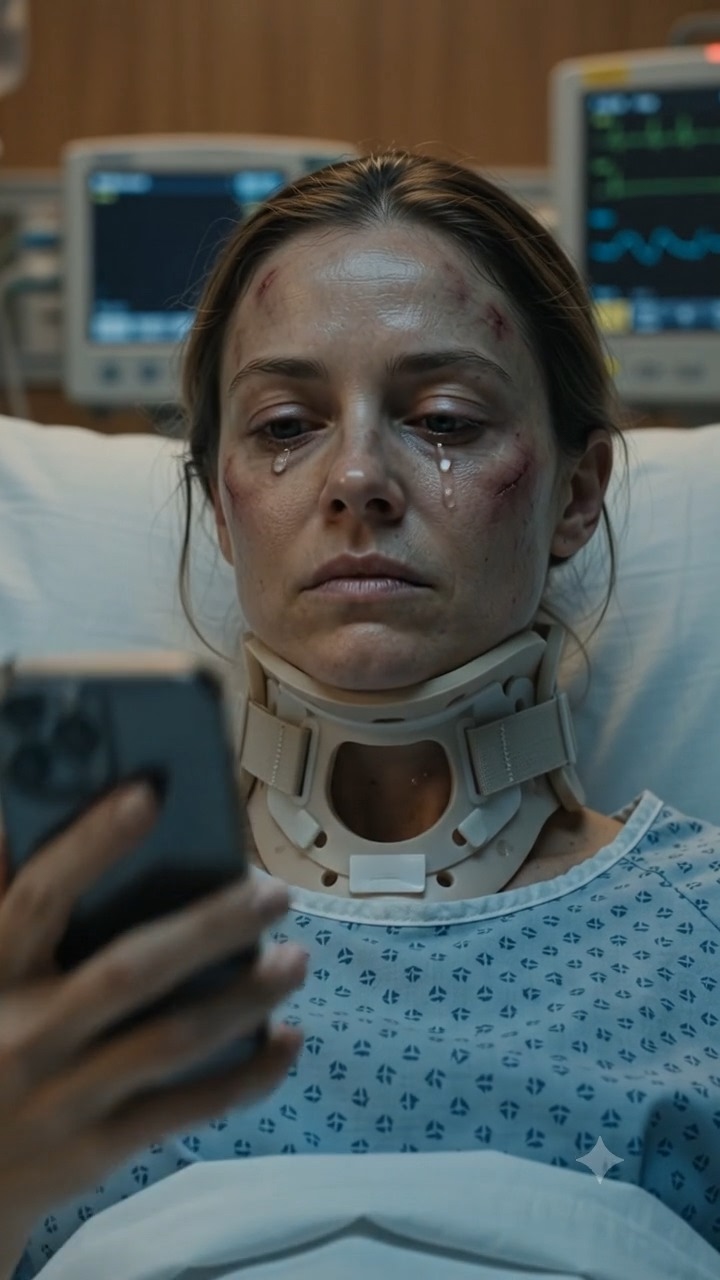
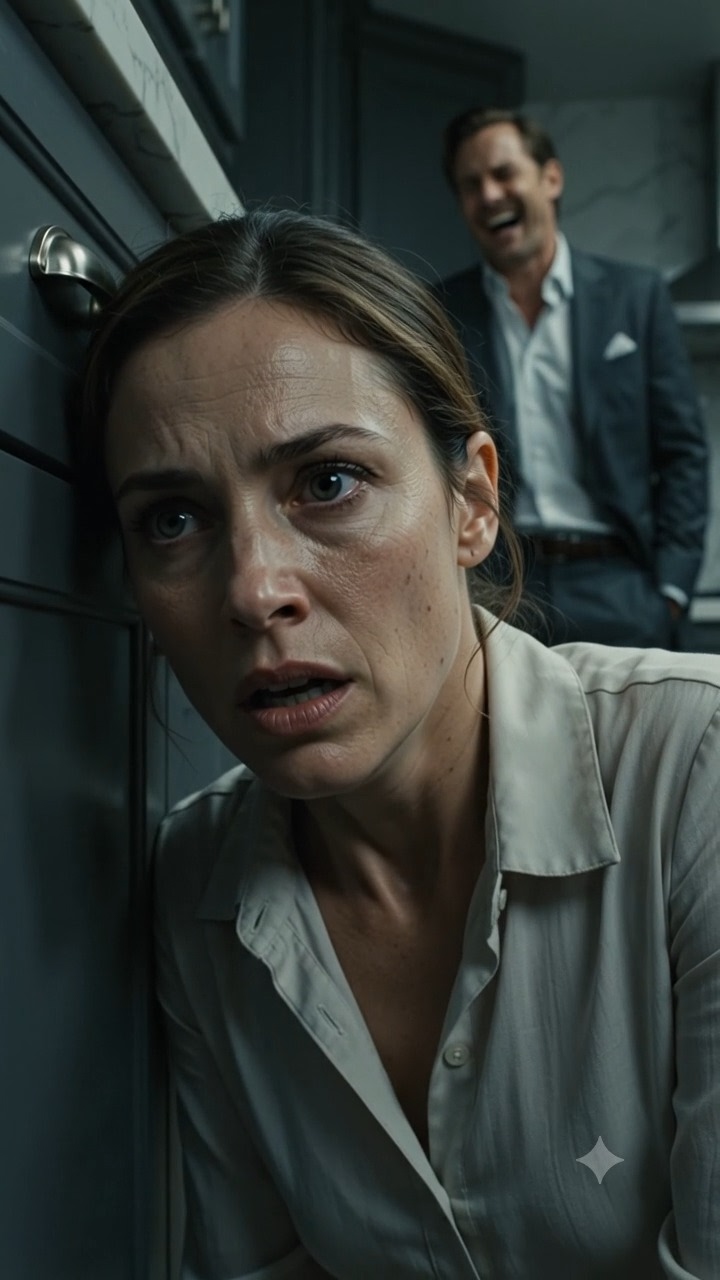
“She put a heavy metal latch over the door handle,” I said, my voice rising in anger. “There was a broom handle wedged through the frame so I couldn’t push it open from the inside! I have bruises all over my shoulders from slamming my body against that wood!”
“And we have the photographs of those bruises,” Evelyn replied, her eyes flashing with a predatory intelligence. “We also have the forensics report from the venue storage room. The crime scene techs found your blood on the inside door panel, Emily. They found your torn fingernails embedded in the wood grain of the lower frame where you tried to dig your way out.”
Nathan put his arm around my shoulders, feeling me shiver at the horrifying image.
“What is our next move, Ms. Cross?” Nathan asked.
Evelyn leaned forward, placing her elbows on her knees. “We don’t wait for the criminal trial, which could take six to eight months to reach a jury. We take control of the narrative right now. The defense relies on silence and backroom settlements. We give them neither.”
“What are you proposing?” I asked.
“A press conference,” Evelyn said plainly. “Outside the courthouse tomorrow morning. You don’t have to say much, Emily. You just have to let the world see you in that wheelchair, fresh out of surgery, and let me read the official EMT intake logs and show the physical evidence.”
I looked out the window. The sky over the city was dark and bruised, matching the storm that was raging inside me. For twenty-six years, I had allowed Celeste and Madison to dictate who I was. I had swallowed my pride, accepted their insults, and played the role of the invisible, accommodating second-tier daughter.
If I stayed quiet now, I was telling the world that my son’s life was worth less than my sister’s wedding photos.
“Do it,” I said, turning back to Evelyn. “Do the press conference.”
The next morning at ten o’clock, the steps of the County Courthouse were crammed with news vans, satellite dishes, and dozens of reporters holding microphones.
The story had already gone viral on social media under the tag #JusticeForEmily. The public was fascinated and horrified by the sheer cruelty of the headline: Mother Locks Pregnant Daughter in Storage Room to Save Sister’s Wedding Day.
Nathan pushed my wheelchair down the concrete ramp. I was wearing a plain dark sweater, a blanket draped over my lap, my face pale and exhausted, but my eyes fixed forward.
Evelyn stood at the podium, surrounded by microphones from every major news network in the region.
“Good morning,” Evelyn began, her clear, ringing voice silencing the chaotic murmur of the crowd instantly. “My name is Evelyn Cross, and I represent Emily Hayes. We are standing here today not to request privacy, but to demand absolute accountability.”
Cameras flashed in a dizzying cascade of light.
“For thirty-six hours, the legal defense team representing Celeste Montgomery and the Sterling family has attempted to recast an act of monstrous cruelty as a ‘tragic miscommunication,'” Evelyn continued, her voice echoing off the stone pillars of the courthouse. “They have suggested that my client was unstable. They have suggested that she faked her distress.”
Evelyn reached into her folder and pulled out a series of large, high-resolution photographs, holding them up high for the camera lenses.
“These are photographs of the interior door of the storage room at Blackwood Manor,” Evelyn shouted over the sudden chorus of gasps from the reporters. “As you can see, there are bloody handprints extending three feet up from the floor. These marks were made by a young mother who was locked in total darkness, undergoing precipitous labor on a cold concrete floor.”
Evelyn dropped the photos and held up a second document.
“This is the official 911 dispatch transcript,” she declared. “When emergency medical technicians arrived, Celeste Montgomery explicitly informed them—and I quote—’She is an alcoholic having an attention-seeking panic attack. Do not rush.’ End quote.”
The crowd of reporters broke into an uproar. Microphones were shoved forward as journalists shouted questions over one another.
“Ms. Cross! Has Madison Sterling contacted her sister?” “Emily! Do you plan to press full criminal charges?” “Is it true the baby is still on life support?”
Evelyn raised her hand, calming the crowd down, then stepped aside and looked at me.
Nathan gently rolled my chair up to the array of microphones. I reached out, my fingers trembling slightly as I adjusted the flexible neck of the center microphone.
I looked directly into the blue lenses of the news cameras.
“My son’s name is Leo,” I said, my voice small at first, then growing stronger with every word. “He weighs four pounds, eleven ounces. Right now, he is laying in a plastic box with a tube down his throat because my mother decided that my life—and his life—were acceptable sacrifices for a wedding reception.”
A heavy, breathless silence fell over the crowd of reporters.
“I spent twenty-six years believing that if I just was quiet enough, helpful enough, and patient enough, my family would love me,” I said, tears glistening in my eyes, though my voice did not falter. “I was wrong. What my mother did was not a mistake. It was not a misunderstanding. It was a choice. And I am here to make sure she faces the consequences of that choice for the rest of her life.”
I looked straight into the central camera lens, knowing that somewhere in her grand mansion, Celeste was watching this broadcast on a fifty-inch screen.
“You took my voice in that room, Mom,” I said softly. “You are never going to take it again.”
Orther Post